
By Dr. Aimon Hazari
Vision and excellent eye health are essential to a great quality of life. As you age, vision often changes, and risks for various eye diseases increase. High-quality and comprehensive eye exams by qualified eye doctors are vital to keeping track of your vision and any eye diseases that re potentially developing. Poor vision can be treated in many ways, allowing full access to all that life has to offer. Eye disease can be prevented and mitigated when symptoms are caught early with routine, preventative care. If you are ages 40-54, how often should you get an eye exam?
The American Academy of Ophthalmology recommends getting a comprehensive baseline eye exam at age 40. Around this age, early signs of eye disease and changes in vision may begin to appear. Even if you do not notice any changes in your vision, an eye doctor providing an in-depth eye exam can determine if you have early signs of eye disease which could later result in vision deterioration. Based on the results of your eye exam and your overall health, your eye doctor can then give you a recommended eye exam schedule personalized to your needs.
The American Academy of Ophthalmology recommends if you are age 40 to 54, you have no symptoms of eye disease, and you are seeing clearly that you have a comprehensive eye examination at least every 1 to 3 years. Your eye doctor may recommend more frequent eye exams based on your personal health situation and profile.
Comprehensive eye exams are more than updating your prescription for glasses and contacts. Eye doctors (ophthalmologists and optometrists) conduct comprehensive eye examinations to look for eye disease caused by health conditions such as diabetes and to look for other eye diseases which could lead to blindness, such as glaucoma and cataracts.
Comprehensive eye exams allow your eye doctor to detect eye diseases at their earliest stage, when they are the most treatable. Just like your systemic health, your eye health is unique to you and affected by many variables.
Some eye diseases may not cause noticeable symptoms until the disease is advanced. If not detected until advanced stages, preventing progression of a disease or avoiding permanent vision damage becomes more difficult.
The guidelines above apply to individuals ages 40 to 54 who present no symptoms or disease risk factors. Here are some common reasons your eye doctor may increase the frequency of eye exams for you:
Routine, comprehensive eye exams have been proven by medical research to help combat eye disease and vision loss. Schedule an appointment with a Thomas Eye Group licensed eye doctor today to care for your vision and eye health properly.
You should visit your local eye doctor more frequently if you are at a higher risk of developing disease, if you have personal health history of visual problems or disease, or if you have a family history of eye disease.
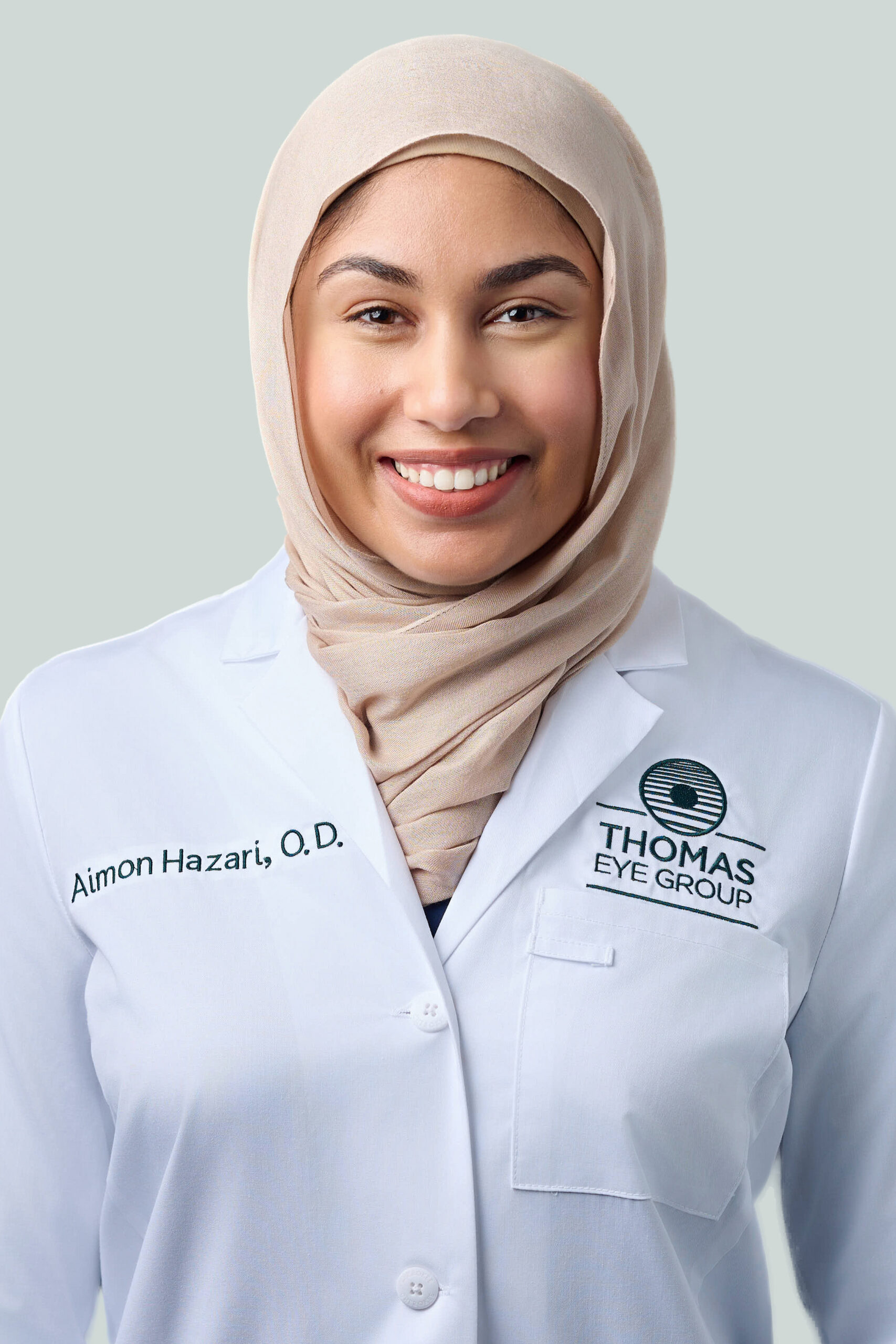
Aimon Hazari, O.D. is a board- licensed comprehensive optometrist serving patients at our Lilburn and Suwanee locations. She offers a range of services including comprehensive eye exams with prescriptions for eyeglasses and contact lens, and treatment of various ocular conditions such as dry eye disease, macular degeneration, glaucoma, and diabetic eye disease, among others.
The American Academy of Ophthalmology (AAO) is the world’s largest association of eye physicians and surgeons. It describes itself as a “global community of 32,000 medical doctors who protect sight and empower lives by setting the standards for ophthalmic education and advocating for our patients and the public.” Its website is a great resource to learn more about how to care for your eyes.
The American Optometric Association (AOA) describes itself as the leading authority on quality care and an advocate for our nation’s health, representing more than 44,000 doctors of optometry (O.D.), optometric professionals, and optometry students.
Eye Exam and Vision Testing Basics
https://www.aao.org/eye-health/tips-prevention/eye-exams-101
Frequency of Ocular Examinations – 2015
https://www.aao.org/clinical-statement/frequency-of-ocular-examinations