
By Dr. A.C. Flynn
Although ensuring the eyes are healthy is always important, there are certain health conditions that warrant extra precaution and more regular diagnostic screenings and exams.
To safeguard eye health and vision throughout their lifetime, people with the following health conditions need to see an eye doctor at least annually:
If you have a diagnosis of diabetes, a diagnosis of high blood pressure or have a family history of eye disease (such as glaucoma, retinitis pigmentosa or macular degeneration), we highly encourage you to seek regular exams to mitigate permanent vision damage.
According to the American Academy of Ophthalmology, if you have diabetes, you should see an eye doctor as soon you are diagnosed, regardless of your age. Follow your eye doctor’s recommendation about how often you should be rechecked, as this varies for every individual.
People with diabetes almost always have unique eye care needs and considerations, even if their blood sugar is well controlled. Diabetes can lead to diabetic retinopathy, a serious complication that can lead to blindness. Diabetes can also lead to cataracts, glaucoma and other vision complications.
One in three American adults is affected by high blood pressure. Eye doctors may notice signs of high blood pressure during a dilated eye exam. Unusual bends, kinks or bleeding from blood vessels in the back of the eye can signal high blood pressure.
High blood pressure is a known risk factor in the onset and/or progression of glaucoma, diabetic retinopathy, macular degeneration and other diseases. It can also affect vision by leading to blocked veins and blocked arteries in the retina, which can cause permanent vision loss.
As with most diseases, your risk of developing an eye disease is higher if you have a family history of that eye disease. Glaucoma, age-related macular degeneration and many additional eye diseases can be genetic. An important example is that if you have a family member with glaucoma, you are four to nine times more likely to be impacted by the disease. Glaucoma can cause blindness if left untreated. Glaucoma is painless and affects one’s peripheral vision first. Most patients do not notice they have glaucoma until there is already irreversible vision loss. So, it’s important to know your family history and share that information with your eye doctor.
Routine, comprehensive eye exams have been proven by medical research to help combat eye disease and vision loss. Schedule an appointment with a Thomas Eye Group licensed eye doctor today to care for your vision and eye health properly.
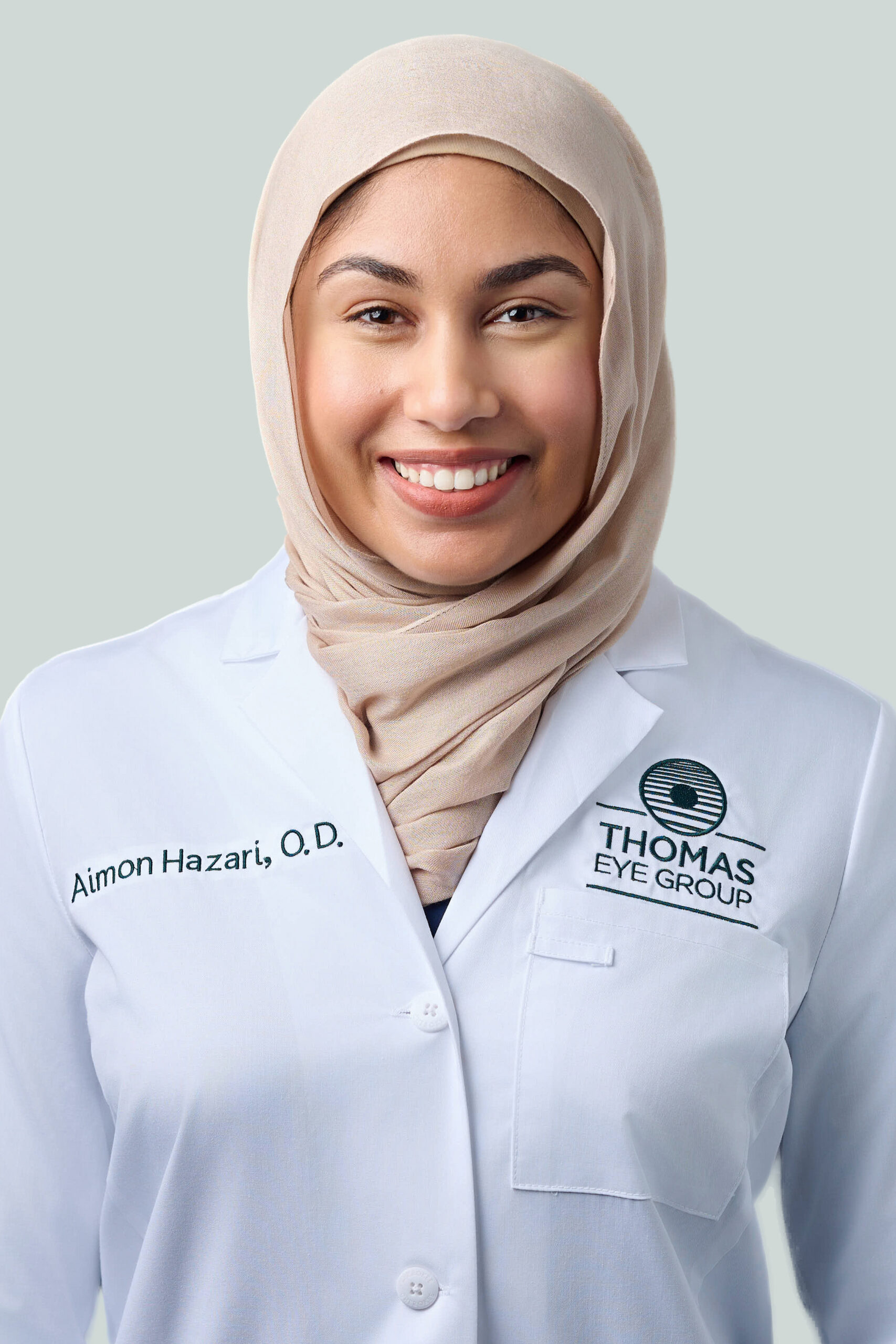
Aimon Hazari, O.D. is a board- licensed comprehensive optometrist serving patients at our Lilburn and Suwanee locations. She offers a range of services including comprehensive eye exams with prescriptions for eyeglasses and contact lens, and treatment of various ocular conditions such as dry eye disease, macular degeneration, glaucoma, and diabetic eye disease, among others.
The American Academy of Ophthalmology (AAO) is the world’s largest association of eye physicians and surgeons. It describes itself as a “global community of 32,000 medical doctors who protect sight and empower lives by setting the standards for ophthalmic education and advocating for our patients and the public.” Its website is a great resource to learn more about how to care for your eyes.
The American Optometric Association (AOA) describes itself as the leading authority on quality care and an advocate for our nation’s health, representing more than 44,000 doctors of optometry (O.D.), optometric professionals, and optometry students.
Ask Your Family About Their History of Eye Disease
https://www.aao.org/eye-health/tips-prevention/family-reunions
Don’t Let Diabetes Distress Ruin Your Vision
Don’t Let Diabetes Distress Ruin Your Vision – American Academy of Ophthalmology
How Diabetes Affects Your Eye Care
How Diabetes Affects Your Eye Care – American Academy of Ophthalmology
Diabetic Eye Disease
Diabetic Eye Disease – American Academy of Ophthalmology
20 Surprising Health Problems an Eye Exam Can Catch
20 Surprising Health Problems an Eye Exam Can Catch – American Academy of Ophthalmology
Blood Pressure